
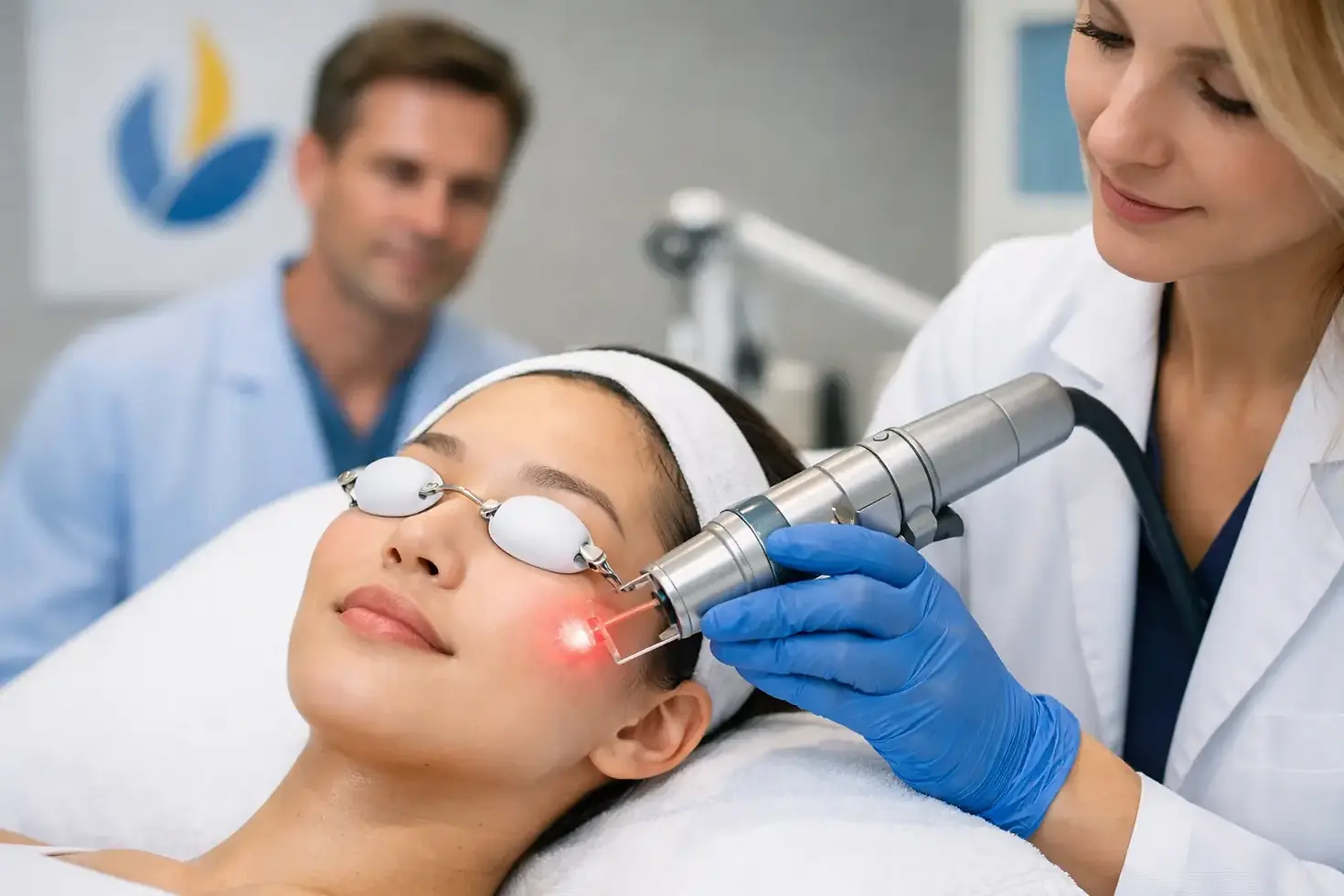
How Laser Resurfacing Works on Skin

A mirror usually shows the problem before a camera does - acne scars that catch the light, sun damage that makes skin look uneven, or fine lines that linger even when the face is at rest. That is why patients often ask how laser resurfacing works before they ask how many sessions they need. They want to know what the treatment is actually doing inside the skin, and whether that process is precise, safe, and worth the downtime.
Laser resurfacing is a physician-guided skin treatment that uses controlled energy to remove damaged surface cells, heat targeted layers of skin, or do both at once. The goal is not simply to make skin look brighter for a few days. It is to trigger a structured wound-healing response that supports collagen remodeling, improves texture, softens scars, and creates more even tone over time. When performed with the right device settings, appropriate patient selection, and medical supervision, it can be one of the most effective treatments for skin renewal.
How laser resurfacing works in the skin
The simplest way to understand laser resurfacing is this: the laser delivers a focused beam of light that is absorbed by water in the skin. Because skin contains a high amount of water, that energy can be used very precisely. Depending on the device and treatment plan, the laser either vaporizes part of the outer skin layer, heats deeper tissue to stimulate collagen, or creates microscopic treatment zones while leaving surrounding skin intact.
That distinction matters. Not all resurfacing lasers behave the same way, and the depth of treatment changes both the results and the recovery. Ablative lasers remove columns or layers of skin. Non-ablative lasers heat the skin more gently without removing the surface to the same degree. Fractional technology divides the laser beam into many microscopic zones, treating a percentage of the skin while sparing surrounding tissue. This helps speed healing while still encouraging remodeling.
Once the laser creates controlled thermal injury, the body begins repair. Old keratinocytes are shed, inflammatory signals recruit healing cells, fibroblasts increase activity, and new collagen and elastin formation begins. This process does not finish in a weekend. Surface recovery may happen in days to weeks, but collagen remodeling continues for months. That is why patients often see gradual improvement rather than one overnight transformation.
What concerns laser resurfacing can treat
Laser resurfacing is often chosen when topical skincare has reached its limit. It is especially useful when the issue involves texture, not just surface dullness. Fine lines around the eyes and mouth, acne scarring, enlarged pores, rough texture, and some forms of sun-related pigmentation often respond well.
It can also help with photodamage, including uneven skin tone and a crepey skin surface caused by cumulative UV exposure. In the right candidate, laser treatment can improve surgical scars and certain benign lesions as part of a broader skin rejuvenation plan. That said, not every dark spot or scar should be treated with the same laser. Melasma, active acne, rosacea, and post-inflammatory hyperpigmentation require more caution, especially in skin types that are more prone to pigment shifts.
This is where medical assessment matters. The same complaint - for example, “pigmentation” - can mean epidermal sun spots, deeper dermal pigmentation, melasma, or inflammation-related discoloration. Each behaves differently under laser energy.
Ablative vs non-ablative resurfacing
Ablative resurfacing is the more intensive approach. Lasers such as CO2 or erbium:YAG remove part of the skin surface and deliver thermal energy into the dermis. Because they create a stronger remodeling response, they are often used for deeper wrinkles, more visible acne scarring, and advanced textural damage. The trade-off is greater downtime, more aftercare, and a higher risk of complications if the treatment is too aggressive or the patient is not a suitable candidate.
Non-ablative resurfacing works below the surface with less disruption to the epidermis. Recovery is easier, but results are usually more gradual and may require a series of sessions. This category can be a good fit for patients who want collagen stimulation and texture improvement with less visible downtime.
Fractional resurfacing can exist within either category. A fractional CO2 laser, for example, is still ablative, but it treats skin in a grid-like pattern rather than fully removing the entire surface. For many patients, that balance between efficacy and recovery is what makes fractional technology so useful.
Why the laser can improve scars and wrinkles
Scars and wrinkles are structural problems, which means treatment has to change structure. A cream can hydrate the surface and improve appearance temporarily, but a laser can create enough controlled injury to reorganize collagen architecture. In acne scars, this can help smooth abrupt edges and reduce depth. In fine lines, new collagen can improve skin thickness and elasticity so creases appear softer.
Heat is central to this effect. When dermal tissue reaches the right temperature range, collagen fibers contract and a wound-healing cascade is triggered. Fibroblasts then lay down new collagen during the remodeling phase. The result is not just exfoliation. It is tissue renewal at a deeper level.
Results still depend on the problem being treated. Rolling acne scars may improve more than deep ice-pick scars. Fine lines respond better than very deep folds caused by volume loss. Laser resurfacing is powerful, but it is not a replacement for every category of treatment. Some patients need combination plans that may include subcision, injectables, skincare, or energy-based tightening.
What treatment feels like and what happens after
Before treatment, the skin is cleansed and assessed. Topical numbing cream is often applied, and some stronger resurfacing procedures may require additional comfort measures. During treatment, patients often describe the sensation as heat, snapping, or a prickling burn, depending on the device and settings.
Immediately after, the skin may look red, swollen, and warm, similar to a strong sunburn. With ablative treatment, there can be pinpoint bleeding, crusting, bronzing, or peeling as new skin forms. With gentler fractional or non-ablative treatment, recovery may be limited to redness, mild swelling, and temporary roughness.
Healing follows stages. First comes inflammation, which is expected. Then the skin begins re-epithelialization, meaning fresh skin cells migrate to repair the treated zones. Over the following weeks and months, collagen remodeling continues beneath the surface. This timeline is one reason realistic counseling matters. A polished result usually requires patience.
Safety, skin tone, and why customization matters
The safest laser is not the most expensive one. It is the one selected correctly for the patient in front of the doctor. Skin tone, tanning history, scar tendency, active skin conditions, medications, and lifestyle all influence treatment planning.
Darker skin tones can absolutely benefit from laser procedures, but the risk profile changes. Post-inflammatory hyperpigmentation is a major concern if settings are too aggressive or if the wrong device is used. Pretreatment skincare, conservative parameters, sun avoidance, and disciplined aftercare become even more important. This is one reason medically supervised clinics place so much emphasis on consultation rather than offering one-size-fits-all packages.
Active infections, isotretinoin history, poor wound healing, keloid tendency, and unrealistic expectations may also affect candidacy. A premium treatment experience should never rush past these details.
How many sessions and what results to expect
There is no universal number. A single ablative treatment may produce visible change for some patients, while non-ablative rejuvenation often works best as a series. Acne scars, pigmentation, and photoaging each respond on different timelines.
Most patients notice early brightness once the skin recovers, then more meaningful textural improvement as collagen remodeling develops. Final results depend on treatment depth, baseline skin condition, at-home care, sun protection, and whether combination therapy is needed. Maintenance also matters because skin continues to age, and UV exposure continues to affect pigment and collagen.
At a medically led aesthetic clinic such as Dream Clinic, that is why treatment planning is usually framed around outcomes rather than a single machine. The device matters, but the diagnosis, settings, and follow-up matter just as much.
Aftercare is part of the result
Aftercare is not an extra instruction sheet. It is part of the procedure. Skin that has been resurfaced needs strict sun protection, gentle cleansing, barrier-supportive moisturization, and avoidance of unnecessary irritation. Picking, over-exfoliating, or returning too quickly to active skincare can increase the risk of prolonged redness, infection, or pigment changes.
Patients sometimes focus on the laser day itself, but the healing window is where much of the outcome is protected or compromised. Good aftercare supports better recovery, steadier pigment, and a more predictable final result.
Laser resurfacing works by combining precise technology with the skin’s own repair mechanisms. That is what makes it effective, and also why it should be treated as a medical procedure rather than a casual facial upgrade. When the diagnosis is accurate and the treatment is properly customized, resurfacing can do more than refresh the skin - it can change how the skin behaves, heals, and reflects light for months ahead.


