
How to Remove Spider Veins: Complete Guide for Malaysians


You've been rubbing apple cider vinegar on your legs for months. You've tried witch hazel, horse chestnut supplements, and every "miracle" cream the internet promised would work.
Nothing has changed.
Those thin red and purple lines are still there, and you're still avoiding shorts, skirts, and anything that shows your legs.
Here's what no one told you: spider veins cannot be removed with home remedies. No topical product, supplement, or natural treatment can eliminate existing spider veins because the problem isn't on your skin's surface.
Spider veins are damaged blood vessels beneath your skin, and they require medical treatment to close permanently.
The good news? Professional treatments like laser therapy and sclerotherapy can permanently close existing spider veins in just 2 to 4 sessions. Most patients see significant improvement after the first treatment.
But here's the critical insight most guides miss: the right treatment depends on where your spider veins are located. Laser therapy works best for facial spider veins, while sclerotherapy is often used for larger leg veins. Get this wrong, and you'll get suboptimal results.
In this comprehensive guide, you'll learn how to finally get rid of those spider veins, which treatment suits your situation, and how to find a qualified provider in Malaysia.
What Are Spider Veins (And Why Home Remedies Don't Work)
Spider veins (medically known as telangiectasias) are small, damaged blood vessels visible just beneath your skin's surface. They appear as thin red, blue, or purple lines, often spreading in web-like patterns.
According to the Cleveland Clinic, spider veins affect more than 50% of women, becoming increasingly common after age 30. You're not alone in this.
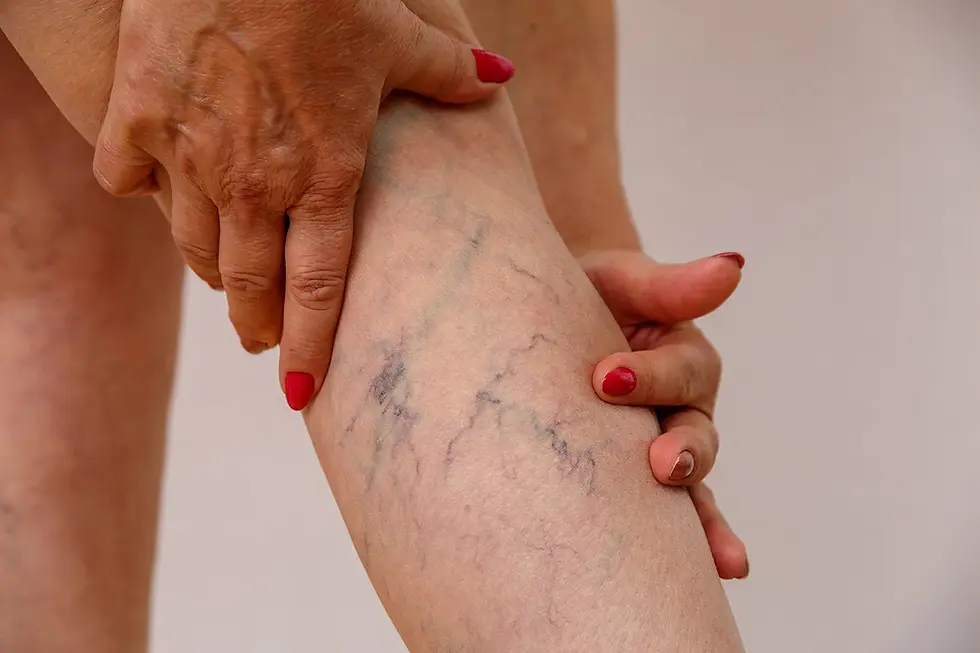
Why do spider veins form
Spider veins develop when small blood vessel walls weaken and expand. Once damaged, these tiny vessels become permanently visible through the skin. The most common causes include:
Genetics: Research suggests 80 to 90% of people with spider veins have a family history of the condition
Hormonal changes: Pregnancy, menopause, and hormonal birth control affect blood vessel walls
Prolonged standing or sitting: Jobs requiring long hours in one position reduce proper circulation
Sun exposure: UV damage weakens blood vessel walls, especially on the face
Ageing: Skin and blood vessels naturally lose elasticity over time
Understanding these causes explains why topical products cannot help. The damage is structural, occurring beneath the skin's surface.
Spider veins vs. Varicose veins
Feature | Spider Veins | Varicose Veins |
Size | Under 1mm in diameter | 3mm or larger |
Appearance | Flat, thin lines | Raised, bulging, rope-like |
Symptoms | Usually none (cosmetic) | Aching, heaviness, swelling |
Health risk | Cosmetic only | May indicate venous disease |
Decision rule: If your veins are flat and painless, you have spider veins. If your veins bulge or cause leg heaviness, see a vascular specialist first.
Why home remedies fail
Apple cider vinegar, witch hazel, and vitamin K creams sit on your skin's surface. They cannot reach the damaged blood vessels beneath. According to MedlinePlus, telangiectasias require medical intervention.
These remedies are widely recommended online, so it's no wonder you tried them. The problem isn't you. It's misinformation.
Important: Compression stockings and exercise can help prevent new spider veins but cannot remove existing ones.
Which Treatment Works Best for YOUR Spider Veins?
The most suitable treatment depends on the treatment area and vein size. Laser therapy, particularly with devices such as Fotona SP Dynamis, is typically preferred for facial spider veins and smaller veins. Sclerotherapy is more commonly recommended for larger spider vein networks on the legs.
Laser treatment for spider veins

Laser Treatment: Vein Care Center
Laser therapy directs concentrated light energy at spider veins, causing the blood inside to coagulate. The vein walls collapse, seal shut, and are gradually absorbed by your body.
According to a Cochrane systematic review, Nd:YAG lasers penetrate 2 to 3mm deep, making them effective for superficial spider veins while minimising surface damage. The longer wavelength also makes Nd:YAG lasers safer for darker skin tones common in Malaysia.
Why is laser preferred for facial spider veins:
No injection required on delicate facial tissue
Precise targeting of individual vessels
Integrated cooling systems for comfort
Lower risk of complications compared to injection
Small facial veins may fade immediately
At Dream Clinic, the Fotona vascular laser is used to treat both facial and leg spider veins, offering a versatile solution across different treatment areas.
The Fotona laser treats more than just spider veins. It can also address wrinkles, skin tightening, and pigmentation in the same session.
Sclerotherapy for leg spider veins

Sclerotherapy’s Treatment: Belle Clinic London
Sclerotherapy involves injecting a sclerosant solution directly into spider veins. The solution irritates the vein walls, causing them to collapse. According to DermNet NZ, sclerotherapy achieves 50 to 80% improvement per session for leg spider veins.
Note: Sclerotherapy is not recommended for facial spider veins due to higher complication risks in delicate facial tissue.
Treatment comparison
Both treatments work, but they suit different situations.
Factor | Laser (Fotona Vascular Laser) | Sclerotherapy |
How it works | Injection collapses the vein | Light energy heats and seals the vein |
Best for | Larger leg vein networks | Facial veins, smaller leg veins |
Needles? | Yes | No |
Compression stockings | Required (1 to 3 weeks) | Not needed |
Bruising | Common | Minimal |
Sessions | Multiple | Often fewer |
At Dream Clinic, we specialise in Fotona Vascular Laser treatment, offering a needle-free option with minimal downtime.
What to Expect During Treatment

Spider vein treatment is a quick, in-office procedure taking 15 to 45 minutes. Most patients rate discomfort at 2 to 4 out of 10. No general anaesthesia is needed.
Before your treatment
Pre-treatment instructions:
Avoid blood thinners (aspirin, ibuprofen) for several days beforehand
Avoid sun exposure on the treatment area for 1 to 2 weeks
Wear loose, comfortable clothing
Remove lotions or makeup from the treatment area
During laser treatment
You'll wear protective eyewear. The doctor delivers short pulses of laser energy, which feel like brief warmth or rubber-band snaps. The Fotona system includes integrated cooling for comfort.
Session duration:
Facial spider veins: 15 to 20 minutes
Leg treatments: 20 to 30 minutes
After treatment
Treated veins may appear darker temporarily. This is normal and indicates the treatment worked.
What to expect:
Temporary redness (resolves within hours to days)
Some veins appear darker before fading
Possible mild bruising
Most patients return to work the same day. Avoid strenuous exercise for 24 to 48 hours.

Your Beauty, Backed by Medical Expertise
All treatments are performed by qualified doctors using FDA-approved technologies, ensuring safety and natural-looking results.
Recovery and Aftercare in Malaysia's Climate
Here's where most guides fail. They give generic advice written for cooler countries. Malaysia's hot, humid climate requires specific strategies.
Compression stockings in Malaysian heat
If recommended after leg treatment (typically 1 to 3 weeks):
Choose breathable, moisture-wicking stockings
Opt for open-toe styles for ventilation
Wear during air-conditioned hours
Apply talcum powder to reduce friction
Consider scheduling treatment during cooler months (November to February)
Yes, compression stockings in Malaysian heat sounds uncomfortable. But 1 to 3 weeks of mild discomfort is worth legs you'll feel confident showing off.
Sun protection after treatment
UV exposure can darken treated areas. In Malaysia's intense sun, this requires extra vigilance.
Apply SPF 30+ daily, even on cloudy days
Reapply every 2 to 3 hours if outdoors
Avoid peak sun (10 am to 4 pm) for 2 to 4 weeks post-treatment
Since you're already protecting your skin from the sun during recovery, it's a good time to address any existing pigmentation concerns as well.
Results and Maintenance
Here's the honest truth: treated spider veins are permanently closed. They don't grow back. The veins your doctor treats today will be gone for good.
However, new spider veins can develop over time. This happens because of the same underlying factors that caused your original ones: genetics, hormonal changes, ageing, and lifestyle habits.
This is not treatment failure. It's simply how some bodies work. Think of it like dental care. You don't stop brushing just because new plaque will form. You maintain.
Results timeline
How quickly you see results depends on the treatment method and the size of your spider veins.
Treatment | When you'll see results |
Laser (small veins) | May see immediate fading during the session |
Laser (larger veins) | Darkening first, then gradual fading over 4 to 12 weeks |
Sclerotherapy | Veins fade over 3 to 6 weeks |
Full results | 2 to 3 months after completing your treatment series |
Some veins may need a second session for complete clearance. This is normal and doesn't mean the treatment failed. Your doctor will assess your progress at each follow-up appointment.
Long-Term Results and Maintenance
Most patients who are prone to spider veins benefit from maintenance treatments every 1 to 3 years. These sessions are typically shorter and less extensive than your initial treatment since you're only addressing new veins that have developed.
The good news? Once you know how effective treatment is, maintenance feels routine rather than daunting. Many of our patients schedule an annual check-in to catch any new veins early.
Prevention strategies
While you can't completely prevent spider veins (especially if you're genetically predisposed), these habits can slow their development:
Maintain a healthy weight to reduce pressure on leg veins
Exercise regularly, especially walking and swimming, to improve circulation
Avoid prolonged sitting or standing in one position. If your job requires it, take short walking breaks every hour
Elevate your legs when resting at home
Wear compression stockings during long flights or car journeys
Protect your skin from sun exposure to prevent weakening of blood vessel walls
Sun protection is especially important for facial spider veins. The same UV damage that causes spider veins also contributes to pigmentation and dark spots. Using SPF 30+ daily protects against both.
Addressing multiple signs of ageing
Spider veins often appear alongside other skin concerns. If fine lines and wrinkles are also bothering you, many patients choose to address both in the same treatment plan.
The Fotona laser used for spider veins can also target wrinkles and skin laxity, making combination treatments convenient and efficient.
During your consultation, let your doctor know about any other skin concerns. They can recommend a treatment plan that addresses everything together, saving you time and multiple visits.
Your Beauty, Backed by Medical Expertise
All treatments are performed by qualified doctors using FDA-approved technologies, ensuring safety and natural-looking results.
Why Choose Dream Clinic

KKM-licensed and LCP-certified: All treatments are performed by LCP-certified aesthetic doctors with extensive experience in vascular laser procedures. Dream Clinic is fully licensed by Malaysia's Ministry of Health.
Advanced Fotona technology: For spider vein treatment, Dream Clinic uses the Fotona SP Dynamis NX, an advanced vascular laser that treats both facial and leg spider veins with precision and minimal discomfort.
Multiple convenient locations: Founded by Dr. Jesse Chong, Dream Clinic has branches in Penang, Kuala Lumpur (Bukit Jalil), and an upcoming location in Johor.
Proven patient satisfaction: Over 500 five-star Google reviews and ranked among the top 3 aesthetic clinics in Penang and KL.
Honest consultations: Every consultation includes clear assessment, straightforward recommendations, and transparent expectations.
Conclusion
Spider veins won't disappear on their own, and no home remedy can remove them. Professional treatments like laser therapy can permanently close existing spider veins in just a few sessions.
The key is choosing the right treatment. Facial spider veins respond best to laser. Leg spider veins can be treated with laser or sclerotherapy depending on size. And in Malaysia's climate, proper aftercare makes all the difference.
You have options. You don't have to keep covering up.
FAQs
Q1. How long does spider vein treatment take?
Each session takes 15 to 45 minutes. Facial treatments require 15 to 20 minutes, leg treatments 20 to 30 minutes. Most patients complete 2 to 4 sessions spaced 4 to 6 weeks apart.
Q2. Is spider vein removal painful?
Most patients rate discomfort at 2 to 4 out of 10. Laser treatment feels like brief warmth or rubber band snaps. Topical numbing cream can be applied for sensitive patients.
Q3. How soon will I see results?
Small veins may fade immediately. Larger veins darken first, then fade over 4 to 12 weeks. Full results are visible 2 to 3 months after completing your treatment series.
Q4. Can spider veins come back after treatment?
Treated veins are permanently closed and won't return. However, new spider veins can develop due to genetics, hormones, or lifestyle. Maintenance treatments every 1 to 3 years address new veins.
Q5. What is the difference between laser and sclerotherapy?
Laser uses light energy to close veins (preferred for face and small leg veins). Sclerotherapy uses injection (for larger leg vein networks). Dream Clinic's Fotona laser treats both face and leg spider veins.
Q6. Is there any downtime?
Minimal. Most patients return to daily activities the same day. Avoid strenuous exercise for 24 to 48 hours. Compression stockings may be recommended for 1 to 3 weeks after leg treatment.
Q7. Are spider veins dangerous?
Spider veins are almost always cosmetic only. If you experience pain, swelling, or heaviness, consult a vascular specialist to rule out underlying conditions.
References
1. Sandean, D. P., Syed, H. A., & Winters, R. (2024). Spider veins. In StatPearls [Internet]. StatPearls Publishing. https://www.ncbi.nlm.nih.gov/books/NBK563218/
2. Nakano, L. C. U., Camargo, P. A. B., Flor, B. B., Navarro, T. P., & Mendes, C. A. (2017). Treatment for telangiectasias and reticular veins. Cochrane Database of Systematic Reviews. https://pmc.ncbi.nlm.nih.gov/articles/PMC6483333/
3. Cleveland Clinic. (2022). Spider veins: Causes, symptoms & treatment. https://my.clevelandclinic.org/health/diseases/24567-spider-veins
4. DermNet NZ. (2025). Telangiectasia. https://dermnetnz.org/topics/telangiectasia
5. MedlinePlus. (n.d.). Telangiectasia. U.S. National Library of Medicine. https://medlineplus.gov/ency/article/003284.htm


