
Does HIFU Hurt? What Pain Really Feels Like

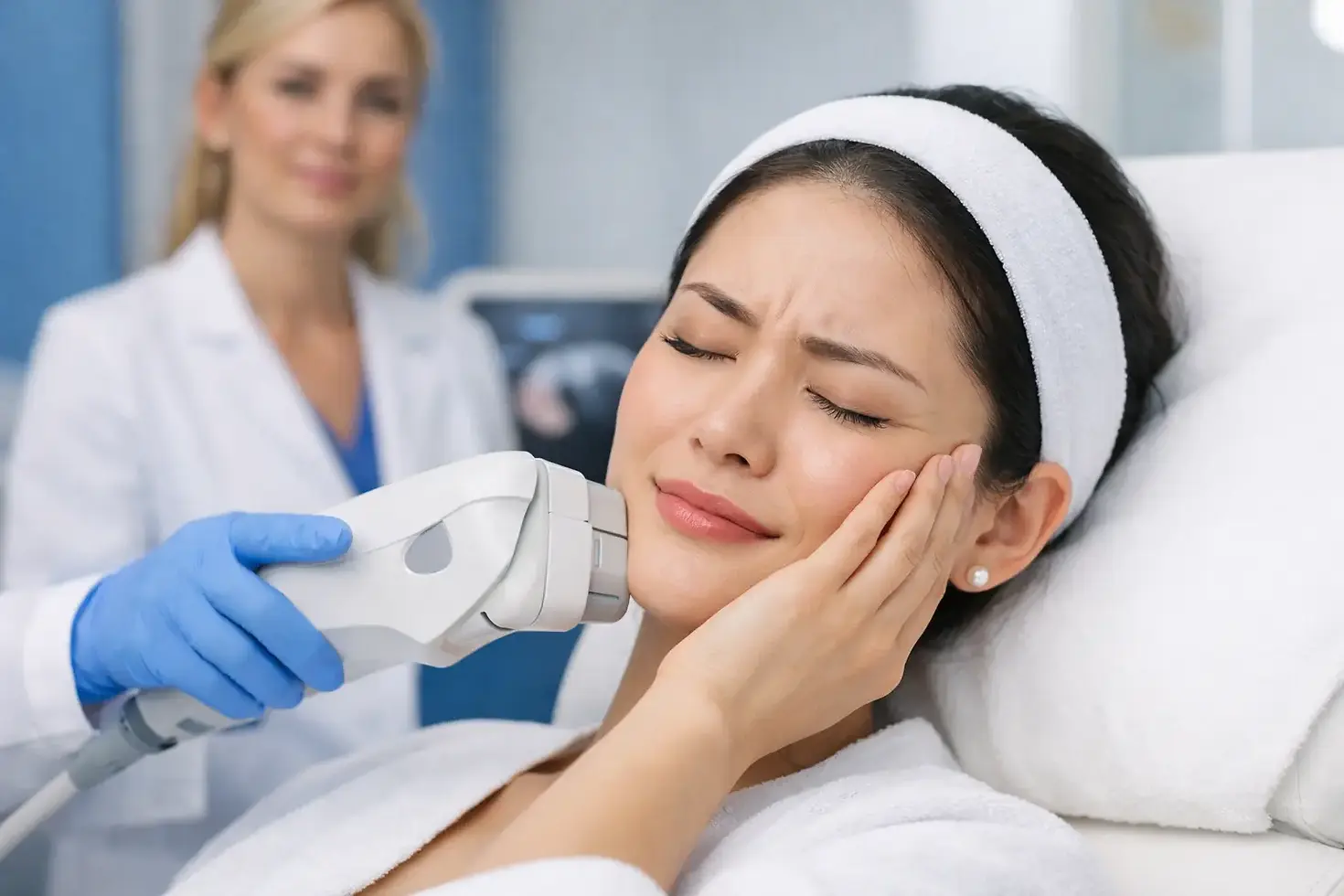
You can usually tell who has read too many HIFU horror stories online - they arrive expecting either unbearable pain or a completely sensation-free treatment. The truth sits in the middle. If you are wondering does HIFU hurt, the most accurate answer is yes, it can feel uncomfortable, but for most patients it is tolerable, brief, and very technique-dependent.
HIFU, or high-intensity focused ultrasound, is designed to deliver focused thermal energy into deeper structural layers of the skin, including the SMAS layer that is also targeted in surgical lifting. That depth is exactly why HIFU can create a tightening and lifting effect without surgery, but it is also why some patients feel sharp, warm, or zing-like sensations during treatment. Discomfort is possible because energy is being delivered below the skin surface, not just on top of it.
Does HIFU hurt during treatment?
Most patients do not describe HIFU as outright painful from start to finish. They usually describe it as intermittent discomfort. You may feel small bursts of heat, a snapping sensation, tingling, or a deep prickling feeling as each ultrasound line is delivered. In areas where the skin is thinner or closer to bone, the sensation can feel more intense.
The forehead, jawline, and areas around the cheekbones often feel sharper than fleshier areas. Under the chin can also be sensitive, especially in patients with less soft tissue cushioning. By contrast, some parts of the cheeks or lower face may feel only mildly warm or tingly. This is why two people can have very different answers to the same question.
Pain during HIFU is not constant. It happens in pulses as the device fires. Between those pulses, there is usually relief. That stop-start pattern makes the treatment much more manageable than many first-time patients expect.
Why HIFU discomfort varies so much
The biggest reason one person says HIFU barely bothered them while another says it was intense is that discomfort depends on several clinical factors, not just personal pain tolerance.
Treatment depth and energy settings
HIFU uses different cartridges to target different depths. Deeper settings, such as those aimed at structural support layers, often feel stronger than superficial passes. Higher energy settings may also create more noticeable discomfort, although they are not automatically better in every patient. Good treatment planning is about precision, not simply turning the energy up.
Area being treated
Bony areas and thinner skin generally feel more sensitive. The jawline, forehead, temples, and under-chin region can produce more noticeable sensations than broader, softer zones. If the treatment includes multiple facial regions, some parts may feel easy while others feel distinctly intense.
Individual anatomy
Patients with thinner facial fat, more sensitivity, inflamed skin, or a lower pain threshold may perceive HIFU more strongly. Nerve distribution also matters. Some people naturally feel more nerve-related zing or tenderness in certain zones.
Device quality and clinical technique
This is one of the most overlooked factors. Not all HIFU experiences are equal because not all devices, protocols, and operators are equal. A medically supervised treatment using properly selected cartridges, appropriate energy levels, and correct line placement is typically more controlled and predictable than a poorly planned session. Aggressive treatment by an inexperienced operator can increase discomfort without improving outcomes.
What does HIFU pain actually feel like?
Patients use different language, but a few descriptions come up often. Some say it feels like tiny electric shocks deep under the skin. Others compare it to quick hot pinpricks, a rubber-band snap, or a concentrated ache that lasts only a second or two. A deep vibrating sting is another common description.
What it should not feel like is uncontrolled burning across the skin surface. HIFU works at depth, so while there can be heat and discomfort, a properly performed treatment should remain controlled and monitored throughout. If a patient is struggling significantly, the doctor should reassess settings, technique, and whether the treatment is appropriate to continue as planned.
Does HIFU hurt afterward?
After treatment, most patients do not describe strong pain. What is more common is tenderness, tightness, mild swelling, or a bruised feeling in certain areas. Some patients notice sensitivity when pressing along the jawline or cheeks for a few days. Others feel occasional tingling or a pulling sensation as the deeper layers recover.
This post-treatment soreness is usually mild and temporary. It can last from a few hours to several days, depending on treatment intensity and the area treated. Rarely, deeper tenderness can linger longer, especially after a more intensive session. Even then, it is generally manageable and does not prevent normal daily activity.
How doctors reduce HIFU discomfort
A premium HIFU experience is not only about the device. It is also about how the treatment is planned and delivered. In a physician-led setting, discomfort can often be reduced meaningfully without compromising safety.
The first step is proper consultation. Not every patient needs the same energy level, cartridge combination, or treatment density. Skin laxity, facial structure, age, and treatment goals all matter. A personalized protocol is usually more comfortable than a one-size-fits-all approach.
The second step is technique. Controlled placement, thoughtful pacing, and avoiding unnecessary overlap can make a major difference. In some cases, topical numbing or oral pain relief may be considered, although many patients complete treatment without needing much support. Communication during the session also matters. When a patient knows which area is naturally more sensitive, the experience feels less alarming and more manageable.
Cooling the skin afterward, avoiding excessive pressure on treated areas, and following post-care instructions can also help minimize lingering tenderness.
When HIFU may feel more painful than expected
There are situations where HIFU can feel stronger than average. If you are having treatment over a very lean face, over prominent bone, or in an area with more nerve sensitivity, the session may be less comfortable. The same may apply if energy settings are high, if many lines are being delivered, or if your skin barrier is already irritated.
Timing can play a role too. If you are sleep-deprived, anxious, or highly stressed, discomfort often feels amplified. Patients who expect zero sensation sometimes find the treatment harder than those who were prepared for a moderate level of discomfort.
This is why honest counseling matters. A medically credible clinic should not tell you HIFU is completely painless if that is unlikely. It is more reassuring when expectations are realistic.
Is painful HIFU a sign it is working?
Not necessarily. This is a common myth. More pain does not automatically mean better lifting or tighter skin. Effective HIFU depends on delivering the right energy to the right depth in the right pattern for the right patient. Overtreating a patient for the sake of intensity is not good medicine.
Some discomfort is expected because ultrasound energy is being focused into deeper tissue. But the goal is not to maximize pain. The goal is to create controlled thermal coagulation points that stimulate collagen remodeling and tissue contraction while maintaining safety and patient tolerance.
A well-executed treatment can still be effective even if the patient describes it as tolerable rather than severe.
Who should think twice about HIFU?
If you have an extremely low pain tolerance, active skin inflammation, recent aggressive facial treatments, or unrealistic expectations about sensation, it is worth discussing alternatives or modified treatment plans with your doctor. HIFU is not the right choice for every face or every concern.
Patients with significant skin laxity may also need to understand that HIFU has limits. If someone expects a surgical-level result, they may end up disappointed regardless of discomfort level. The right treatment is not just the one you can tolerate. It is the one that matches your anatomy and goals.
Does HIFU hurt less with the right clinic?
In many cases, yes. Clinical assessment, device quality, and operator expertise all affect both comfort and outcome. An experienced aesthetic doctor understands facial anatomy, tissue depth, contraindications, and how to tailor settings to reduce unnecessary discomfort while still aiming for meaningful results.
That is particularly important for patients comparing premium aesthetic clinics in places like Kuala Lumpur or Penang, where treatment menus can look similar on the surface. Credentials, medical oversight, and technology standards make a real difference once energy-based procedures are involved.
If you are considering HIFU, the better question is not only does HIFU hurt. Ask whether the treatment is being performed by a qualified medical team, whether the device is properly approved, and whether the plan is customized to your face. A short burst of discomfort is easier to accept when the treatment is appropriate, safe, and grounded in sound clinical judgment.
The most helpful mindset is this: expect sensation, not suffering. When HIFU is done well, discomfort is usually part of the process, not the whole story.


