
How to Remove Stubborn Fat Safely

You can lose weight, eat carefully, train consistently, and still notice the same pockets of fullness at the abdomen, flanks, thighs, arms, or under the chin. That frustration is usually what people mean when they ask how to remove stubborn fat. In clinical practice, the answer is rarely one-size-fits-all. Stubborn fat is influenced by genetics, hormones, age, body composition, and the simple reality that some fat cells respond poorly to diet and exercise alone.
This is where a medically guided approach matters. The goal is not just to make fat smaller for a few weeks. It is to identify whether you are dealing with localized fat, skin laxity, bloating, muscle separation, or a combination of concerns, then choose the right strategy based on anatomy and expected outcomes.
Why stubborn fat behaves differently
Stubborn fat is not always a sign that you are doing something wrong. Certain body areas have a higher concentration of fat cells that are more resistant to mobilization. For many adults, these areas include the lower abdomen, love handles, inner thighs, upper arms, back rolls, and submental fat under the chin.
Hormonal shifts can make this more noticeable. Insulin resistance, elevated cortisol, menopause, and age-related changes in muscle mass all affect how the body stores fat. Even when the scale improves, those resistant pockets may remain. That is why patients who are otherwise healthy and active often still seek body contouring.
There is also an important distinction between overall weight loss and body shaping. Weight loss reduces total mass. Body contouring targets disproportionate areas that interrupt balance and definition. If the concern is localized, chasing more aggressive dieting may only lead to fatigue, muscle loss, or a gaunt appearance elsewhere.
How to remove stubborn fat with realistic expectations
If you want to know how to remove stubborn fat effectively, start with the right expectation: most successful plans combine lifestyle management with targeted treatment. There is no credible shortcut that replaces clinical assessment.
A calorie deficit still matters if you are above your ideal body fat range. Sleep quality matters. Resistance training matters because muscle helps improve metabolic health and body composition. But if the issue is a small, persistent fat pocket, medical aesthetic treatments may offer the precision that general weight loss cannot.
The key question is not, "What is the strongest treatment?" It is, "What is the most appropriate treatment for this area, this skin quality, and this patient goal?" Someone with firm skin and a modest bulge may respond very differently from someone with loose skin after weight loss or pregnancy.
Lifestyle foundations still come first
Even premium body contouring treatments perform best when your baseline habits are stable. If your weight fluctuates significantly, results can look inconsistent over time. Patients who maintain a steady routine usually see more durable shaping.
Nutrition should focus on sustainability, not restriction. High-protein meals, controlled portions, adequate fiber, and reduced liquid calories are more useful than extreme detox plans. Resistance training two to four times weekly helps preserve lean mass while improving shape. Daily movement also matters more than many people expect. A treatment can refine an area, but it will not cancel out chronic overeating, heavy alcohol intake, or persistent sleep deprivation.
This is also where clinical honesty matters. If what appears to be fat is mostly loose skin, fat reduction alone may disappoint. If abdominal fullness is related to bloating or posture, the treatment plan changes again. Good outcomes begin with accurate diagnosis.
Non-surgical options for stubborn fat
For patients who want visible improvement without surgery, non-invasive and minimally invasive body contouring can be a strong option. These treatments are best for localized fat, not for obesity management.
Cryolipolysis and fat freezing
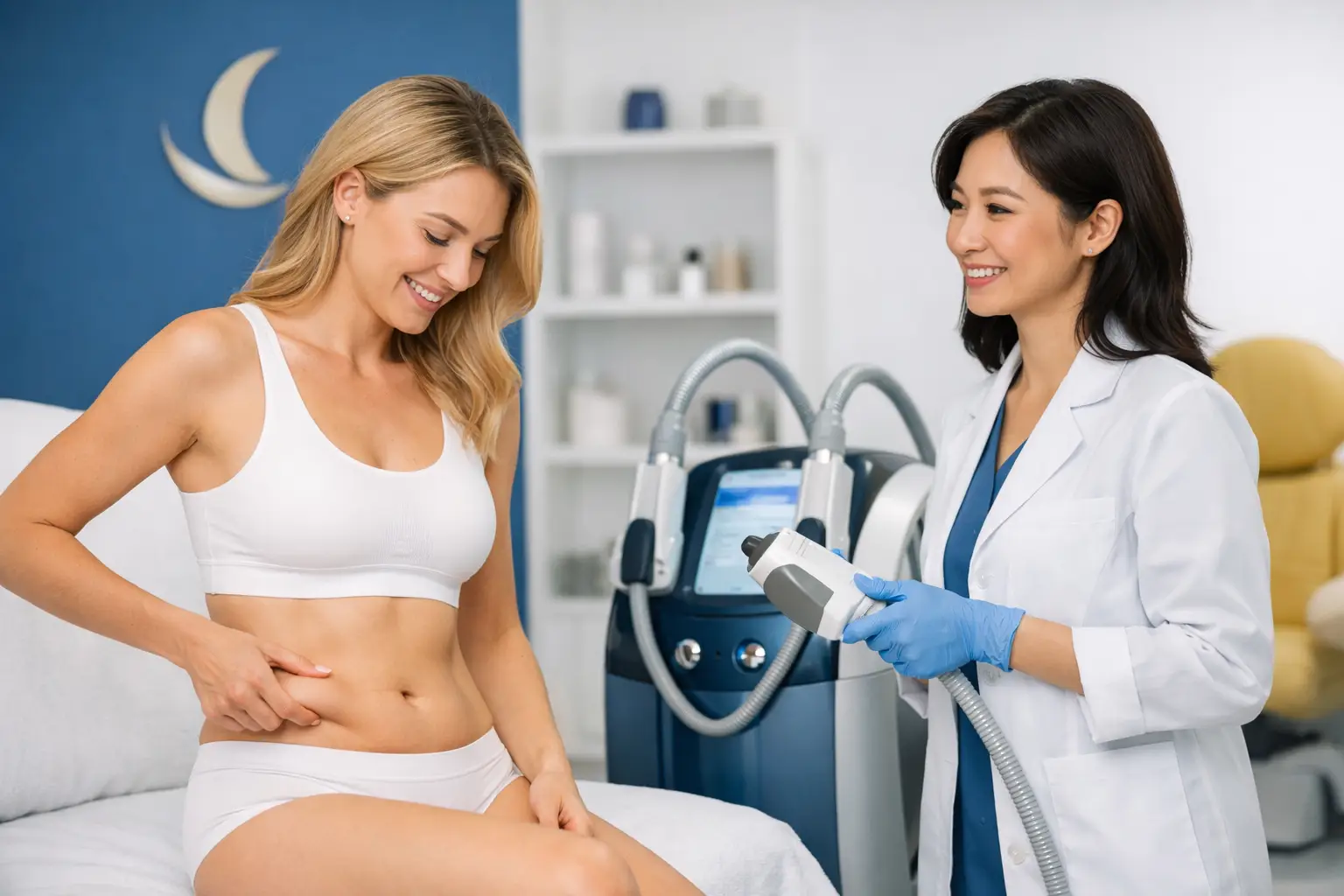
Fat freezing works by exposing targeted fat cells to controlled cooling. Over time, the treated fat cells are gradually cleared by the body. This can be useful for the abdomen, flanks, thighs, bra fat, and under-chin area in selected patients.
The advantage is minimal downtime. The trade-off is patience. Results are not immediate, and multiple sessions may be needed depending on the thickness of the fat layer and the contour goal.
Injectable fat reduction
For small, well-defined areas such as submental fullness, injectable fat-dissolving treatments may be considered. These treatments break down fat cells in targeted zones and are often chosen by patients who want improved jawline definition without surgery.
This approach is precise, but swelling after treatment is common and should be expected. It is also not ideal for every body area. Proper patient selection is essential.
Radiofrequency and ultrasound-based contouring
Some technologies combine fat reduction with skin tightening by using controlled heat or focused energy. These are especially relevant when stubborn fat is accompanied by mild skin laxity. In those cases, reducing volume without addressing the skin can make the area look less smooth.
This is one reason treatment planning should be done by experienced medical professionals rather than based on trends or promotions. The best device is the one that matches the tissue problem.
When skin tightening needs to be part of the plan
A common mistake in body contouring is focusing only on fat. If the skin has lost elasticity, especially after pregnancy, aging, or major weight loss, removing volume alone may not create the refined result a patient wants.
Technologies such as HIFU, radiofrequency-based tightening, or collagen-stimulating approaches may be added to support firmer contours. In some cases, the visual improvement comes less from fat removal and more from improving tissue support. This is particularly relevant for the lower face, arms, abdomen, and thighs.
There is published medical literature supporting the role of energy-based devices in non-invasive body contouring and tissue remodeling, including studies indexed through PubMed at https://pubmed.ncbi.nlm.nih.gov.
Who is a good candidate for treatment?
The strongest candidates are close to their ideal weight, have localized fat deposits, and want shape improvement rather than dramatic weight loss. They also understand that non-surgical treatments can improve contours but will not replicate the volume reduction of liposuction.
You may be a suitable candidate if your weight is relatively stable, your expectations are realistic, and the concern is specific, such as lower belly fullness, love handles, inner thighs, upper arms, or a double chin. If you are pregnant, have certain metabolic conditions, significant skin laxity, or a large amount of excess fat, your treatment plan may need to be modified or deferred.
This is why physician assessment matters. A certified aesthetic doctor can evaluate fat thickness, skin quality, muscle tone, and contraindications before recommending any protocol.
Safety matters more than marketing
The popularity of body contouring has led to an oversupply of dramatic claims. Not all fat reduction devices are equal, and not every provider is medically qualified to assess complications, contraindications, or combination treatment planning.
When choosing a clinic, look beyond before-and-after photos. Ask whether the treatment is performed under doctor supervision, whether the technology is FDA-cleared or otherwise well-studied, and whether your plan is tailored to your anatomy rather than sold as a package. Safety, consistency, and proper indication are what protect both your result and your health.
This matters even more when combining treatments. For example, using fat reduction in an area with poor skin support may require a staged plan. A premium clinic experience is not just about comfort. It is about precise assessment, evidence-based treatment selection, and follow-up that reflects medical standards.
What results should you actually expect?
Most non-surgical fat reduction treatments produce gradual improvement, not overnight transformation. You may notice better definition, smoother clothing fit, and a more balanced silhouette over several weeks to months. The result should look natural because the best contouring does not announce itself.
You should also expect variation. Some patients respond quickly. Others need repeat sessions or combination treatment. Genetics still plays a role. So does how consistently you maintain your weight after treatment.
At a medically supervised aesthetic clinic such as Dream Clinic, the value of consultation-led planning is that the treatment goal is defined clearly from the beginning. That often leads to better satisfaction than simply choosing the most advertised device.
The smartest next step
If you have been doing the right things and one area still refuses to change, that does not mean you have failed. It usually means the problem is more specific than general advice can solve. The most effective approach is to assess whether you need fat reduction, skin tightening, muscle support, or a combination plan built around your anatomy and goals.
The right treatment should make you look more proportionate, not overdone. And the right consultation should leave you with clarity, not pressure.


