
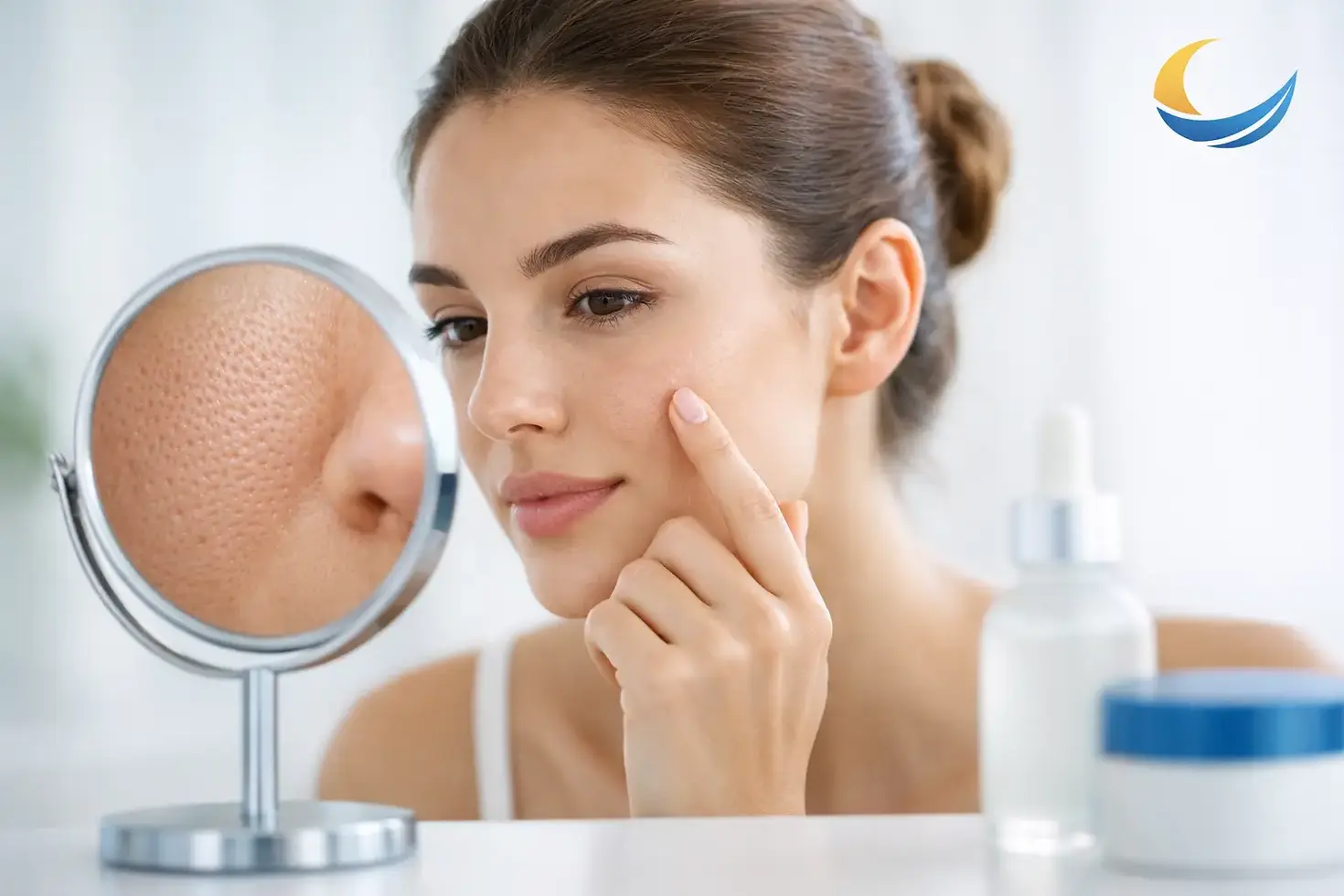
How to Reduce Enlarged Pores Safely

If your skin looks smooth in the morning but your pores seem more obvious by midday, you are not imagining it. Oil production, sun damage, congestion, and age-related collagen loss can all make pores appear larger over time. When patients ask how to reduce enlarged pores, the most honest answer is this - you cannot permanently erase pores, but you can make them look significantly smaller and less noticeable with the right combination of skincare and medically supervised treatment.
Why pores look enlarged in the first place
Pores are normal openings in the skin that allow sebum and sweat to reach the surface. They are essential to skin function. What most people call “large pores” is usually a visible change in the pore opening, often driven by excess oil, debris buildup, reduced skin elasticity, or a history of acne.
Genetics play a role, and so does skin type. Oily and combination skin usually shows pores more clearly, especially around the nose, cheeks, and forehead. But enlarged pores are not only an oil issue. As collagen declines with age and chronic UV exposure, the skin around the pore loses support. That makes the opening stretch and appear more prominent.
This is why pore care is rarely one-dimensional. A foaming cleanser alone will not correct texture caused by sun damage, and a laser will not help much if daily skincare keeps clogging the pores again.
How to reduce enlarged pores at home
Daily skincare matters because it controls the factors that exaggerate pores. The goal is not to strip the skin. It is to keep pores clear, regulate oil, and preserve collagen.
Use a cleanser that removes oil without over-drying
Harsh cleansing can backfire. When the skin barrier is irritated, it may become red, dehydrated, and even oilier. A gentle gel or foaming cleanser is usually ideal for oily or acne-prone skin, especially if it contains salicylic acid. Salicylic acid is oil-soluble, so it can penetrate into the pore lining and help dissolve congestion.
If your skin is more sensitive, start slowly. Using an exfoliating cleanser twice a day may be too much, particularly if you are also using retinoids or acids at night.
Add a retinoid if your skin can tolerate it
Retinoids are among the most effective topical options for improving the appearance of pores. They increase cell turnover, reduce comedone formation, and support collagen remodeling over time. That combination helps skin look smoother and pores appear tighter.
Results are gradual, not instant. Mild flaking or dryness is common in the beginning, so frequency matters. Starting two to three nights a week is often more sustainable than applying too much too soon.
Do not skip sunscreen
This is where many pore routines fail. UV damage breaks down collagen, and collagen loss makes pores look more stretched. Daily broad-spectrum sunscreen is one of the most practical ways to prevent enlarged pores from worsening.
Choose a lightweight, non-comedogenic formula that you will actually wear every day. If a sunscreen feels greasy and causes you to avoid it, it is the wrong one for your skin.
Use chemical exfoliants with restraint
AHAs and BHAs can improve texture, but more is not always better. Salicylic acid is generally more useful for visibly clogged pores and oiliness. Glycolic or lactic acid may help smooth the surface if dullness and roughness are also concerns.
The trade-off is irritation. Over-exfoliation can inflame the skin, disrupt the barrier, and make texture look worse. If your skin is stinging, peeling excessively, or turning persistently red, scale back.
Be realistic about pore strips and heavy makeup
Pore strips can temporarily remove surface debris, but they do not treat the underlying cause of enlarged pores. Heavy, occlusive makeup can also emphasize texture if it settles into pore openings. In many cases, lighter formulations and proper cleansing at the end of the day make a visible difference.
What actually helps when skincare is not enough
For many adults, especially those with acne scarring, chronic oiliness, or age-related loss of skin firmness, home care improves maintenance but does not fully correct the problem. That is where in-clinic treatment becomes more effective.
In-clinic treatments for how to reduce enlarged pores
The best treatment depends on why your pores look enlarged. A physician-led assessment matters because oily skin, acne scars, and laxity-driven pores are treated differently.
Chemical peels
Superficial chemical peels can help unclog pores, reduce oil buildup, and improve overall texture. They are often suitable for patients with acne-prone skin or early textural concerns. Multiple sessions are usually needed, and stronger is not always better. The wrong peel strength can trigger irritation or post-inflammatory pigmentation, especially in Asian skin types.
Laser resurfacing
Fractional lasers are often considered when enlarged pores are linked to acne scarring, uneven texture, or collagen loss. These treatments create controlled micro-injury in the skin to stimulate remodeling and improve surface smoothness.
This category can produce meaningful improvement, but downtime, skin sensitivity, and aftercare are important considerations. Patients with active acne, a compromised skin barrier, or recent sun exposure may need to prepare the skin first.
Microneedling and RF microneedling
Microneedling can improve pore appearance by stimulating collagen production and refining texture. RF microneedling adds radiofrequency energy, which can enhance tightening and remodeling in patients who also have mild skin laxity or acne scar concerns.
These treatments are popular because they are versatile and can be tailored. That said, results depend on proper technique, depth selection, and spacing between sessions. Poorly performed treatments can lead to unnecessary inflammation and inconsistent outcomes.
Skin boosters and regenerative approaches
When pores appear more visible because the skin looks dehydrated, crepey, or less resilient, skin quality treatments may help. Skin boosters and collagen-stimulating treatments do not "close" pores, but they can improve hydration, elasticity, and overall skin texture so pores are less obvious.
This approach is especially useful for patients whose main issue is aging skin rather than heavy congestion.
Ingredients and habits that can make pores look worse
Sometimes the issue is not what you are missing. It is what keeps aggravating the skin. Sleeping in makeup, using pore-clogging products, over-scrubbing, and chasing every trending acid can all keep pores looking more obvious.
There is also a common mistake in trying to dry oily skin into submission. Overly aggressive mattifying routines may briefly reduce shine, but they often leave the skin irritated and reactive. Balanced oil control works better than punishment.
Diet is more nuanced. High glycemic diets and some dairy patterns may influence acne in susceptible individuals, which can indirectly worsen congestion and pore visibility. But food is rarely the sole cause of enlarged pores, and extreme elimination plans are usually unnecessary unless there is a clear pattern.
When enlarged pores may need a doctor’s evaluation
If enlarged pores are accompanied by persistent acne, rough bumps, pitted scarring, or sudden changes in skin texture, it is worth having your skin assessed professionally. What looks like a pore problem may actually be acne scarring, sebaceous filaments, rosacea-related inflammation, or photoaging.
A proper consultation also helps avoid treatment stacking that is too aggressive for your skin type. This matters even more for patients prone to pigmentation, sensitivity, or delayed healing. A premium aesthetic plan should not just aim for visible improvement. It should protect the skin barrier and preserve long-term skin health.
At a medically supervised clinic such as Dream Clinic, treatment planning is based on skin behavior, not guesswork. That distinction matters when you want results that are natural-looking, safe, and consistent.
A smarter expectation leads to better results
The most effective way to think about pores is not “How do I get rid of them forever?” but “What is making them stand out on my skin?” Once that is clear, treatment becomes more precise. Oil can be managed. Congestion can be cleared. Collagen can be stimulated. Texture can improve.
That is how to reduce enlarged pores in a way that actually respects your skin rather than irritating it into temporary smoothness. Better skin usually comes from consistency, not extremes - and from choosing treatments that match the cause, not just the symptom.
If your pores have started to bother you more lately, that is often your skin asking for a more targeted plan, not a harsher one.


