
How to Get Rid of Under-Eye Wrinkles: A Treatment Guide for Malaysian Skin


You got a full night's sleep, but the mirror tells a different story. The fine lines under your eyes make you look tired and older, and nothing you have tried at home seems to make them fade.
Most online guides list every treatment available without helping you figure out which one actually matches your wrinkle.
This guide starts where others skip: identifying what type of under-eye wrinkle you have and which treatment is safest for your skin.
Key Takeaways
Three types of under-eye wrinkles exist (dynamic, static, and volume-loss), each caused by a different mechanism and each requiring a different treatment. Treating the wrong type wastes time and money.
For Malaysian Fitzpatrick III-V skin, non-ablative laser (like Fotona SmoothEye) and RF are the safest professional options. Ablative lasers carry higher hyperpigmentation risk.
Eye creams improve surface hydration but cannot rebuild collagen or restore lost volume. Established wrinkles need professional intervention.
What Type of Under-Eye Wrinkle Do You Have?
Under-eye wrinkles fall into three distinct categories, each caused by a different mechanism and each requiring a different wrinkle treatment approach. Identifying yours is the first step to choosing a treatment that works.
1. Dynamic wrinkles
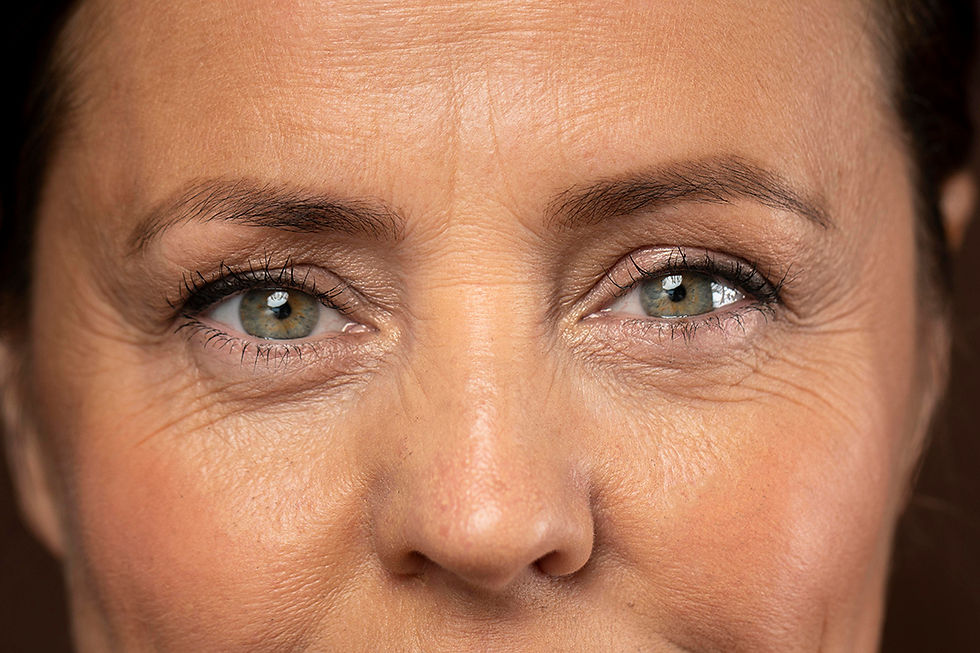
Photo by Magnific
Every smile and squint activates the orbicularis oculi muscle around your eye, and over time that repeated contraction etches crow's feet into the outer corners. In earlier stages, the lines appear during expression and fade at rest.
Smile in the mirror: if the lines show up only when you smile and disappear when your face relaxes, those are dynamic wrinkles.
2. Static wrinkles
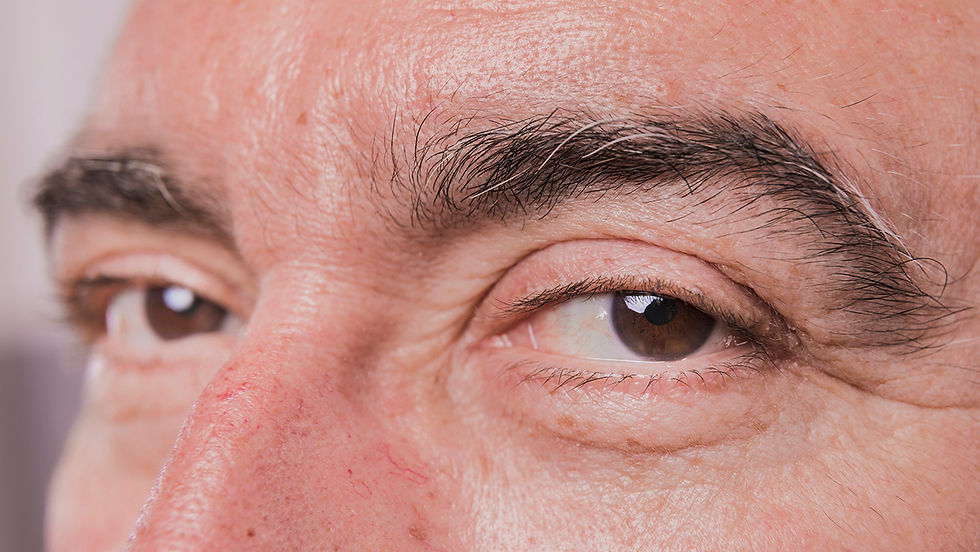
Photo by Magnific
Cumulative UV damage breaks down collagen and elastin, and the under-eye skin is the thinnest on the face at roughly 0.5mm, making it the first area to show that damage.
Unlike dynamic lines, static wrinkles remain visible even when your face is completely still. In Malaysia's tropical climate, they often appear earlier than in temperate regions.
Relaxed face, still seeing fine lines or crepey texture? Those are static wrinkles.
3. Volume-loss wrinkles

Photo by Reddit
Deep hollowing under the eye is not a skin texture problem. Thinning of the periorbital fat pads creates a sunken tear trough with shadowing that makes you look permanently exhausted.
No amount of laser or Botox addresses a structural deficit; volume restoration is what works here.
Note that volume loss is different from eye bags, which involve fat pad protrusion rather than hollowing. If puffiness is your concern, eye bag removal Malaysia addresses that condition.
Most under-eye wrinkles are a combination of types. A 40-year-old Malaysian woman might have dynamic crow's feet, static crepey texture from UV damage, and early tear through hollowing.
That combination, along with factors like sleep wrinkles from pillow compression, is why single-treatment approaches often disappoint.
You haven't been wasting money on the wrong products. Eye creams with retinol and peptides improve surface hydration and slow further degradation, but they cannot relax muscles, rebuild deep dermal collagen, or restore lost structural volume.
Seeking professional treatment is the appropriate response when home care has reached its limit.
Not sure which type you have? Dream Clinic's LCP-certified doctors can assess your under-eye area during a consultation and recommend the right approach.
Which Treatment Works for Each Under-Eye Wrinkle Type?
The best under-eye wrinkle treatment depends on two factors most guides ignore: your wrinkle type and your Fitzpatrick skin type.
Dynamic wrinkles respond to botulinum toxin. Static wrinkles improve with non-ablative laser like Fotona SmoothEye. Volume-loss wrinkles benefit from hyaluronic acid fillers.
Your Wrinkle Type | Best Treatment | How It Works | Safe for Fitzpatrick III-V? | Results |
Dynamic (expression lines, crow's feet) | Relaxes the orbicularis oculi muscle to soften movement-caused lines | Yes, no thermal or light energy involved | 3-5 days onset, lasts 4-6 months | |
Static (UV damage, collagen loss, crepey texture) | Non-ablative laser (Fotona SmoothEye) | Controlled thermal stimulation triggers collagen remodeling without breaking skin surface | Yes, no ablation means minimal hyperpigmentation risk | Immediate results with no downtime |
Volume-loss (tear trough hollowing) | Restores structural volume beneath the skin to reduce hollowing and shadowing | Yes, no thermal or light energy involved | Immediate results, lasts 1-2 years | |
Mixed (combination of types) | Combination approach | Tailored plan addressing each wrinkle type with appropriate treatment | Doctor adapts protocol to skin type | Varies by combination |
Why the type of laser matters for Malaysian skin: Ablative lasers (like CO2 fractional) remove the skin surface to trigger healing.
A study in the Journal of Cutaneous and Aesthetic Surgery found that this wound healing response can produce post-inflammatory hyperpigmentation (PIH) in darker skin types, with dark patches that may take months to fade.
Fitzpatrick skin type classification research further confirms that patients with Fitzpatrick IV through VI skin face significantly higher risk of postprocedural hyperpigmentation from ablative procedures.
Non-ablative lasers like Fotona SmoothEye heat tissue without breaking the surface, making them significantly safer for Malaysian skin types.
This is not "all lasers are dangerous." The distinction is between ablative lasers that wound the skin and non-ablative lasers that stimulate collagen from within.
Understanding Fotona laser technology helps clarify why the approach matters as much as the treatment itself.
A diagnostic consultation with a doctor who assesses your wrinkle type and your skin type prevents these costly mismatches.

Your Beauty, Backed by Medical Expertise
All treatments are performed by qualified doctors using FDA-approved technologies, ensuring safety and natural-looking results.
How Dream Clinic Treats Each Type of Under-Eye Wrinkle
1. Dynamic wrinkles

Crow's feet form because the orbicularis oculi muscle contracts every time you smile or squint.
Botulinum toxin temporarily relaxes that muscle, softening expression lines without affecting your natural facial movement. Results appear within 3-5 days and last 4-6 months. No thermal energy is involved, making this safe for all Fitzpatrick skin types.
2. Static wrinkles

Static wrinkles need collagen rebuilding, not muscle relaxation. Fotona SmoothEye uses the patented SMOOTH mode (Er:YAG) to deliver controlled thermal energy to the periorbital skin without ablation, stimulating collagen remodeling while keeping the skin surface intact.
A study published in Lasers in Medical Science demonstrated that this non-ablative approach produced significant improvement in periorbital wrinkles and skin laxity, with high patient satisfaction and no significant adverse effects.
SmoothEye triggers immediate collagen contraction and long-term neocollagenesis without breaking the skin surface, which is why it carries minimal hyperpigmentation risk on darker skin.
Each SmoothEye session takes just 10-15 minutes, with immediate recovery and no downtime, so you can return to your day straight after treatment.
3. Volume-loss wrinkles

Tear-trough hollowing is a structural deficit that no laser or toxin can correct. Hyaluronic acid dermal filler restores the lost volume beneath the skin, reducing shadowing and the sunken appearance that makes you look permanently tired.
Results are immediate and last 1-2 years. Tear trough filler requires precise placement by an experienced doctor, as the periorbital area has minimal margin for error.
Mixed wrinkle types? Most patients over 35 have a combination. Dream Clinic doctors can combine SmoothEye with botulinum toxin and fillers as part of a tailored plan that addresses each wrinkle type simultaneously. You can contact us for more information.
Why Dream Clinic

LCP-certified aesthetic doctors with specific Fotona laser training and experience treating Fitzpatrick III-V skin
Diagnostic-first approach: doctors assess your wrinkle type and skin type before recommending treatment, not a one-size-fits-all protocol
Full treatment toolkit: SmoothEye, botulinum toxin, dermal fillers, PRF, Plinest polynucleotides, offering genuine combination approaches tailored to each patient
KKM-licensed aesthetic clinic with branches in Penang, Kuala Lumpur (Bukit Jalil), and Iskandar Puteri Johor
500+ five-star Google reviews from patients across Malaysia. Learn more about how to choose an MOH-licensed aesthetic clinic.
Conclusion
Under-eye wrinkles do not require guesswork. Once you know whether yours are dynamic, static, or volume-based, the right treatment path becomes clear.
The frustrating part was never the wrinkles themselves; it was not knowing which type you had or which treatment actually matched it.
For Malaysian skin, that clarity matters even more. Choosing a treatment without considering your Fitzpatrick skin type can lead to complications that are harder to fix than the wrinkles you started with.
The right treatment matched to the right wrinkle type, delivered by a doctor who understands darker skin, makes all the difference between disappointing results and visible improvement.
The most important step is not choosing a treatment. It is getting a proper assessment from a doctor who evaluates your wrinkle type, your skin type, and your goals before recommending anything.
FAQs
Q1. Can eye cream get rid of under-eye wrinkles?
Eye creams with retinol, peptides, or hyaluronic acid can improve hydration and reduce very fine dehydration lines. They cannot rebuild deep collagen, relax muscles, or restore volume. For established wrinkles, professional treatments deliver significantly more visible results. Think of eye cream as maintenance, not correction.
Q2. Does Botox work for all types of under-eye wrinkles?
Botox effectively treats dynamic wrinkles, the lines caused by muscle movement like crow's feet. It does not improve static wrinkles from sun damage or volume-loss wrinkles from fat pad thinning. An experienced aesthetic doctor will assess your wrinkle type before recommending botulinum toxin. For a deeper comparison, see our guide to Botox vs dermal fillers.
Q3. How long do under-eye wrinkle treatments last?
Results vary by treatment type. Botulinum toxin lasts 3-4 months. Hyaluronic acid fillers last 9-12 months. Non-ablative laser treatments like SmoothEye stimulate collagen that continues improving for months and can last 1-2 years with maintenance sessions. Consistent sun protection extends all results.
Q4. How can I prevent under-eye wrinkles from getting worse?
The most effective prevention is daily broad-spectrum SPF 30+ sunscreen, even indoors near windows. In Malaysia's tropical climate, UV-protective sunglasses are equally important. Add a retinol-based eye product from your late 20s, avoid rubbing your eyes, and prioritize 7-8 hours of sleep. Prevention and professional treatment work together, as sun protection extends the results of any professional treatment you receive.
Q5. Can under-eye wrinkles be completely reversed?
Fine lines from dehydration often improve significantly with consistent skincare and professional treatment. Dynamic wrinkles respond well to botulinum toxin. Static wrinkles and volume loss achieve visible improvement with laser, RF, or fillers. Complete reversal of deep structural wrinkles is unlikely, but significant improvement is realistic and achievable.
References
1. Badawi, A., Sobeih, T., & Jasmina, V. (2022). Periocular rejuvenation using a unique non-ablative long-pulse 2940 nm Er:YAG laser. Lasers in Medical Science, 37(2), 1111-1118. https://doi.org/10.1007/s10103-021-03362-6
2. Jansen, F.C., & StatPearls Contributors. (2023). Laser Fitzpatrick skin type recommendations. StatPearls. https://www.ncbi.nlm.nih.gov/books/NBK557626/
3. Sharma, A.N., Fölster-Holst, R., & Garg, A. (2019). Fractional carbon dioxide laser: Optimizing treatment outcomes for pigmented atrophic acne scars in skin of color. Journal of Cutaneous and Aesthetic Surgery, 12(2), 85-90. https://pmc.ncbi.nlm.nih.gov/articles/PMC6676816/
4. Oakley, A. (2012). Fitzpatrick skin phototype. DermNet. https://dermnetnz.org/topics/skin-phototype


