
How Often Should You Get Aesthetic Treatments?


You already know how your last treatment went, whether it was Botox that smoothed your frown lines or a HIFU session that left your jawline firmer. The only question left is when to come back, and that's a fair thing to still be unsure about. Here's the exact schedule, by treatment, so you're never guessing again.
Key Takeaways
Botox runs on a short, predictable cycle of 3 to 4 months. Dermal filler and skin boosters last much longer, from 9 months to 2 years depending on the treatment.
Energy-based treatments like laser toning and HIFU are paced by skin recovery. Fitzpatrick III-V skin tones require more conservative spacing to avoid pigmentation risk.
More frequent is not always better. Over-treating darker skin tones with energy-based devices can set results back rather than speed them up.
How Often Should You Return For Treatment?

Source: Magnific
There is no single number that applies to every treatment. Injectables like Botox work on a short muscle-relaxation cycle, while fillers and skin boosters last far longer because they add volume or stimulate collagen rather than relax muscle.
Energy-based treatments like laser toning and HIFU follow a different logic, built around your skin's recovery time.
Treatment | Initial Series | Maintenance Interval |
Botox | Single session | Every 3 to 4 months |
Dermal filler | Single session | 9 to 24 months, depending on the area |
Skin booster (Profhilo) | 2 to 3 sessions, a few weeks apart | Every 6 to 9 months |
Series of sessions | Tapered, skin-type dependent | |
Single or short series | Several months apart | |
Oligio X | Single session | Several months apart |
Laser toning / RF microneedling | Series of sessions | Tapered, skin-type dependent |
HIFU / RF | Single session or short series | Several months apart |
PRF | Short course | Skin-type dependent |
Botox runs on a 3 to 4 month cycle because of how the muscle recovers, not the skin. As nerve signaling gradually returns, so do movement and lines, which is why most patients rebook in this window. Effects typically last 3 to 4 months before a touch-up is needed.
Filler runs on a different clock than Botox. It lasts 9 months in higher-movement areas like the lips and up to 24 months in the cheek and jawline; a 2025 study confirms persistence varies meaningfully by facial zone.
Skin boosters like Profhilo need an initial course of 2 to 3 sessions a few weeks apart, then maintenance every 6 to 9 months. The interval shifts once that first course ends, so don't assume it stays the same.
Pico Laser PQX runs as a series of sessions, then tapers to occasional maintenance, calibrated by your skin type (more in the next section).
Titanium Lifting is typically a single or short series, with the next session spaced several months out as new collagen builds.
Sylfirm X Dual-Wave Microneedling runs as a series of sessions, then tapers to occasional maintenance, also calibrated by your skin type.
Oligio X builds collagen gradually from a single session, so the next one is spaced several months out, not sooner.
HIFU/RF builds collagen gradually too, so sessions are spaced several months apart. Repeating one too soon adds no benefit, just an unnecessary appointment.
PRF has its own maintenance rhythm, though most guides skip it entirely. The right interval depends on your specific skin or hair goal, confirmed by your doctor at consultation.
Notice that laser and HIFU don't get a single fixed number the way Botox does. That's deliberate, and it comes down to something most guides never mention: your skin type.

YOUR BEAUTY, BACKED BY MEDICAL EXPERTISE
All treatments are performed by qualified doctors using FDA-approved technologies, ensuring safety and natural-looking results.
Why Laser and HIFU Follow a Different Clock

Source: Dr Maha Marji
Laser toning and HIFU don't follow a fixed calendar because they work by triggering your skin's own repair process, and that process takes longer to safely repeat on some skin types than others.

Source: Dream Clinic
For Fitzpatrick III-V skin, common among Malaysian patients, that interval is often set more conservatively than the numbers in Western guides.
Energy-based treatments create controlled micro-injury that prompts collagen remodeling or pigment clearance. Your skin needs to complete that repair cycle before another session adds any benefit. This is why these treatments can't be scheduled on a fixed calendar the way Botox can.
The Fitzpatrick skin type is a classification of how skin responds to energy-based treatment, not a judgment of skin tone. It's the standard reference clinicians use to calibrate laser settings, based on how readily skin tans and how much melanin it carries. Types III to V, common among most Malaysian patients, carry more melanin than the lighter skin types many international guides are written for.
Higher melanin content carries a real, well-documented risk if energy-based sessions are spaced too aggressively.
Repeating a laser or HIFU session before skin has fully recovered can trigger inflammation, which shows up as post-inflammatory hyperpigmentation (PIH), or dark patches, more often in higher-melanin skin. This is well documented: a 2025 review found most PIH cases in skin of color are triggered by laser therapy specifically.
Dream Clinic's LCP-certified doctors weigh this risk when spacing energy-based sessions for Fitzpatrick III to V patients, favoring a more conservative interval. If "every 4 to 6 weeks" online advice sounds off for your skin, it's because most of it wasn't written with your skin type in mind.
One correction worth making: Malaysia's humidity affects comfort and healing, not the safe interval itself. It changes how downtime feels, not how quickly skin repairs between energy-based sessions safely. For how Oligio X compares to other RF devices, see our guide on skin tightening treatment calibrated by skin type.
Knowing the mechanism is one thing. Knowing what overdoing it actually looks like on your own skin is the next piece.
Signs You Might Be Overdoing It

Source: Magnific
It is normal to wonder whether you are due for a break rather than another session. A few specific signs, more than just general redness, are worth watching for after energy-based treatments in particular.
Persistent redness beyond the typical 24 to 72-hour window. Mild redness right after laser or HIFU is normal, but redness that lingers well past that window is not, and it's worth pausing before your next scheduled session.
New dark patches appear days after a session. This is the clearest sign to pause, especially for Fitzpatrick III-V skin, since it signals that the skin did not fully recover between treatments. A systematic review found that repeated laser sessions carry a documented increase in PIH risk in darker skin types, which is why this sign matters more here.
Unusually sensitive or thin-feeling skin after treatment, especially with normal skincare products, can mean the skin barrier has not fully rebuilt. That tactile signal is one you can check yourself, separate from anything visible.
If you notice any of these signs, pause and message your clinic before your next session, rather than searching for a different interval online. Our RF microneedling and Fotona Vascular Laser guides cover skin-type-specific recovery in greater depth, and a conservative schedule is usually not a red flag.
Is a Longer Wait a Sign Your Clinic Is Cutting Corners?

Source: My Aesthetic
A longer interval between sessions can feel like a brush-off, especially if a different clinic's chart online suggests you should be back sooner. In most cases, it is the opposite: a doctor recommending a more conservative schedule for energy-based treatments is a sign of safety-first practice.
Patients sometimes wonder if a longer wait means the clinic does not want to see them, or if a shorter one is just about keeping the appointment book full, and naming that suspicion directly is more useful than pretending it does not exist.
The conservative schedule for energy-based treatments ties back to the skin-type factor already covered above, and it is not an arbitrary decision. Injectables, by contrast, follow a fixed cycle that is not up for debate, which shows the schedule as a whole is not arbitrary either way.
Missing a window does not mean starting from zero, since effects fade gradually as muscle activity or filler volume slowly returns, not an abrupt full reversal.
⭐⭐⭐⭐⭐
Kuda
“I highly recommend this clinic, I’ve done my Botox here and it’s great. Big thanks to Dr Eunice, the consultant Ms Riko and therapist Sofea for such amazing staff ❤️”
YOUR BEAUTY, BACKED BY MEDICAL EXPERTISE
All treatments are performed by qualified doctors using FDA-approved technologies, ensuring safety and natural-looking results.
Some Things Are Worth Consulting Us About Now
Everything above is about timing existing treatments well. But some concerns aren't a maintenance question at all. They're simply something you've been meaning to address, and there's no need to wait for a "right time."
Wanting a more defined eyelid crease. For patients who want a double eyelid look but don't have one naturally, this is a preference-driven choice, not a maintenance decision, so there's no schedule to wait for. Double Eyelid Suture is worth exploring whenever you're ready.

Feeling low confidence about body shape. Body confidence concerns are a common, quiet reason patients hesitate to bring something up. A weight loss treatment consultation can address this directly, rather than waiting for a "before" moment that never quite arrives.
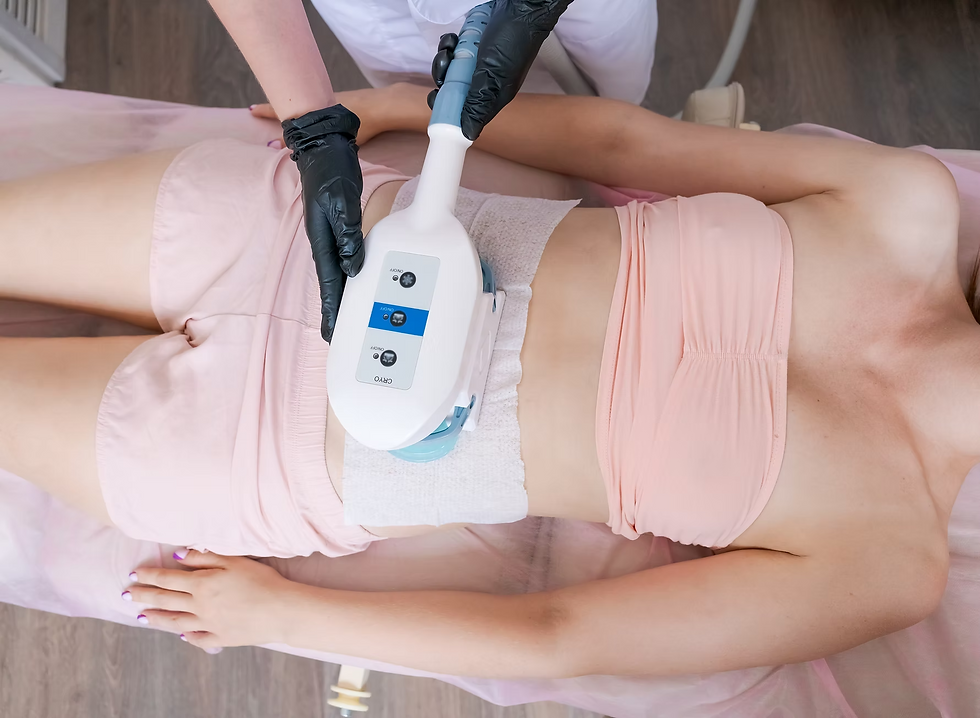
Excessive sweating that affects daily comfort or confidence. Persistent excessive sweating, whether underarms or elsewhere, has a dedicated treatment and doesn't need to be something you just manage around. Our anti-hyperhidrosis treatment exists for exactly this concern.

Intimate health concerns after childbirth or menopause. Changes in vaginal tightness or comfort after childbirth or menopause are common and treatable. IntimaLase is routine women's health care at Dream Clinic, not something that requires extra hesitation to bring up.

Ongoing snoring. Unlike the aesthetic concerns above, snoring has a health-adjacent urgency, since it affects sleep quality for you and often your partner. Fotona NightLase is worth acting on sooner rather than later.

Why Dream Clinic

LCP-certified aesthetic doctors who assess each patient's skin type and response individually before setting or adjusting a maintenance schedule
Ranked Top 3 aesthetic clinic in Penang within our first year of operation
Over 500 five-star Google reviews from patients across Malaysia
Experience with regenerative options like exosome treatment alongside energy-based and injectable maintenance plans
⭐⭐⭐⭐⭐
Sanchaya Soundhar
“I needed to do a skin consultation and chose Dream Clinic during my visit to Penang. They treated me with utmost professionalism and made the experience so seamless and comfortable. Their service was thorough and answered all the questions I had regarding my skin journey. I met with Dr. Amaani, who was very informative about my treatment options and also performed my Pico laser, and was assisted by Wei Han. Fantastic service, couldn’t recommend them more and I’ll definitely always come back here when I visit Penang for sure. Thank you!”
Ready to lock in your next aesthetic treatment maintenance schedule? Book a consultation at Dream Clinic in Penang, Kuala Lumpur (Bukit Jalil), or Johor (Iskandar Puteri). Bring your skin history and any previous treatments you've had. We will confirm the right interval for your specific treatment history.
FAQs
Q1. How often should I get Botox?
Most patients return every 3 to 4 months, as the treated muscle gradually regains movement. Some patients using lower, preventive doses may space this out further.
Q2. How often are skin boosters like Profhilo needed?
An initial course of 2 to 3 sessions a few weeks apart, followed by maintenance roughly every 6 to 9 months to sustain hydration and skin quality.
Q3. Why does my clinic recommend I wait longer between laser sessions than what I read online?
Many published frequency charts are written for lighter, Western skin types. Fitzpatrick III to V skin has a higher documented risk of pigmentation changes, so a longer interval is a safety-led decision, not a weaker treatment.
Q4. What are the signs that I am getting treatments too often?
Persistent redness beyond 2 to 3 days, new dark patches, or unusually sensitive-feeling skin after a session are signs to pause and consult your doctor before your next appointment.
References
1. Biello A, Zhu B. Botulinum Toxin Treatment of the Upper Face. StatPearls Publishing; 2023. https://www.ncbi.nlm.nih.gov/books/NBK574523/
2. Cartier H, Deutsch JJ, Braccini F, et al. Long-Term Performance and Safety of a Superficial HA Filler With Tri-Hyal Technology on Different Facial Zones. J Cosmet Dermatol. 2025;24(1):e16565. https://pmc.ncbi.nlm.nih.gov/articles/PMC11743021/
3. Lawrence E, Syed HA, Al Aboud KM. Postinflammatory Hyperpigmentation. StatPearls Publishing; 2024. https://www.ncbi.nlm.nih.gov/books/NBK559150/
4. Mar K, Maazi M, Khalid B, Ahmed R, Wang OJ, Khosravi-Hafshejani T. Prevention of Post-Inflammatory Hyperpigmentation in Skin of Colour: A Systematic Review. Australas J Dermatol. 2025;66:119-126. https://pmc.ncbi.nlm.nih.gov/articles/PMC12062726/
5. Sharma AN, Patel BC. Laser Fitzpatrick Skin Type Recommendations. StatPearls Publishing; 2023. https://www.ncbi.nlm.nih.gov/books/NBK557626/


