
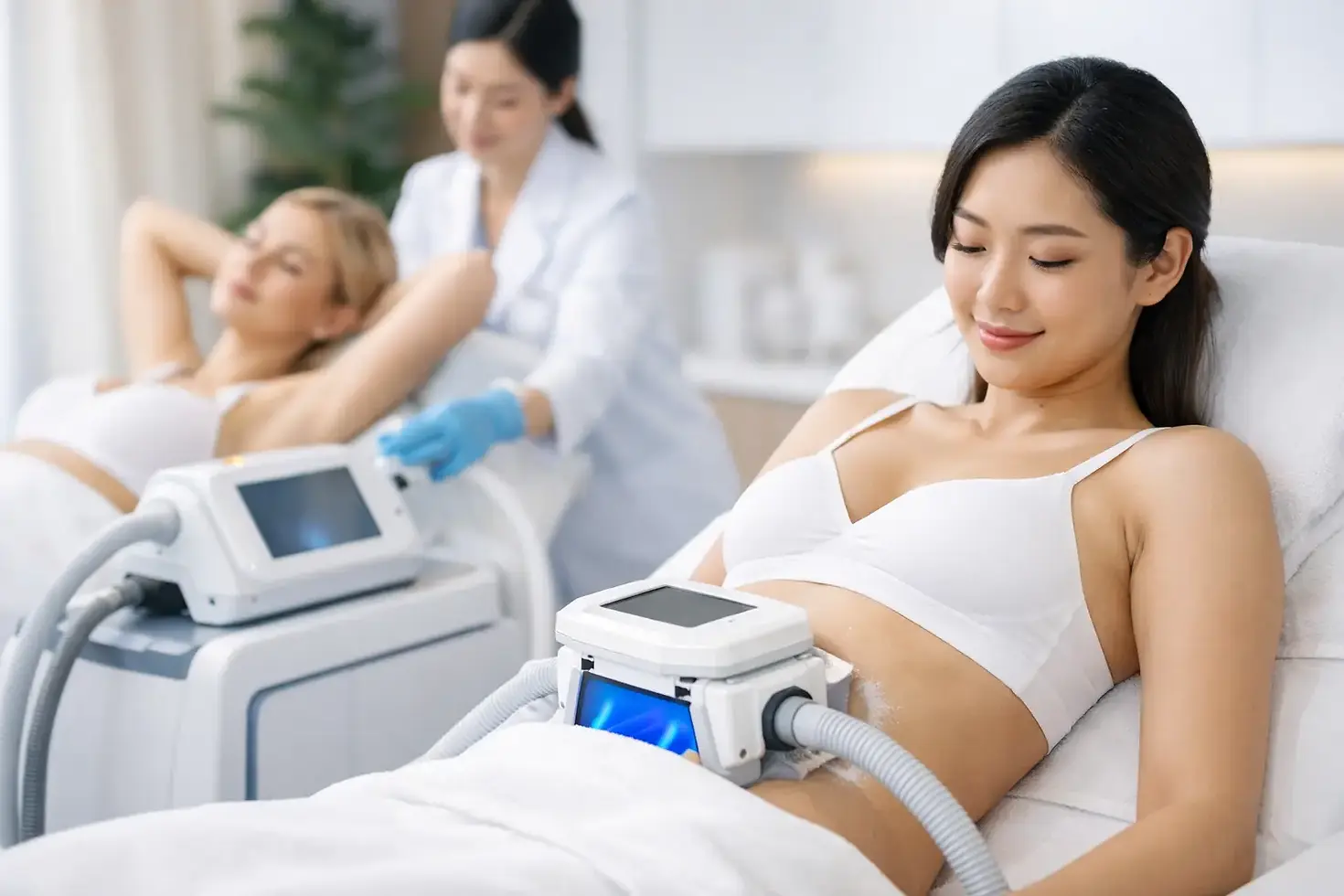
Fat Freezing for Body Contouring: What to Know

Stubborn fat rarely behaves the way patients expect. You can train consistently, eat well, maintain a stable weight, and still notice fullness at the lower abdomen, flanks, upper arms, or under the chin that does not respond the way the rest of the body does. That is where fat freezing for body contouring often enters the conversation - not as a weight-loss treatment, but as a selective way to reduce localized fat pockets under medical supervision.
For many patients, the real question is not whether the treatment exists. It is whether it is worth doing, whether it is safe, and whether the result will look natural. Those are the right questions to ask.
How fat freezing for body contouring works
Fat freezing, also known clinically as cryolipolysis, is based on a simple biological principle. Fat cells are more vulnerable to controlled cooling than surrounding tissues such as skin, nerves, and muscle. When a targeted area is exposed to a carefully calibrated low temperature, the treated fat cells undergo gradual destruction and are then cleared by the body over time.
This matters because the treatment is designed to reduce the thickness of a specific fat layer rather than tighten skin dramatically or create major scale weight changes. In well-selected patients, that distinction is exactly what makes it useful. The goal is contour refinement, not total body transformation.
In a medically run clinic, the process starts with an assessment of the fat pocket itself. The doctor evaluates whether the concern is truly subcutaneous fat, how pinchable the tissue is, whether skin laxity is also present, and whether the patient’s anatomy is suitable for an applicator-based treatment. These details affect both safety and outcome.
What areas respond best
Cryolipolysis tends to work best in areas where there is a discrete, graspable fat bulge. Common treatment zones include the abdomen, flanks, inner or outer thighs, upper arms, back rolls, bra fat, and the submental area under the chin.
Not every concern labeled as stubborn fat is actually an ideal indication. Some patients are dealing more with loose skin than fat volume. Others have diffuse fullness rather than a defined pocket. In those cases, fat freezing alone may not create a satisfying contour change. A good consultation should identify that early instead of overselling a treatment that is only partly matched to the problem.
Fat thickness matters more than body weight
One of the most common misconceptions is that thinner patients do not need body contouring or that heavier patients will automatically get dramatic results. In reality, candidacy depends less on the number on the scale and more on the type of tissue being treated.
A patient near their goal weight with a persistent lower abdominal bulge may be an excellent candidate. A patient seeking generalized fat reduction across multiple large areas may be better served by a different strategy. This is one of the reasons physician-led evaluation is so important.
Who is a good candidate
The best candidates are adults with stable weight, realistic expectations, and localized fat deposits that have not improved despite lifestyle efforts. They usually want a slimmer silhouette in specific areas and prefer a non-surgical approach with little downtime.
The treatment is not appropriate for obesity management, and it should not be presented that way. It also requires screening for cold-related conditions and other medical contraindications. Patients with significant skin laxity, certain hernias, or an expectation of immediate dramatic slimming may need a different plan.
This is where a premium medical aesthetic setting adds real value. The consultation should not simply confirm that treatment can be done. It should determine whether treatment should be done.
What treatment feels like
Most patients describe the first few minutes as intense cold and suction pressure, followed by numbness in the area. Once numbness sets in, the session is generally tolerable. After the applicator is removed, the area may be massaged briefly, which can feel uncomfortable but helps optimize the treatment response.
There is little to no true recovery time in the traditional sense. Many patients return to work or normal routines the same day. Temporary redness, swelling, firmness, bruising, tingling, or reduced sensation can occur and may last days to weeks depending on the area and individual response.
That convenience is one of the treatment’s biggest strengths. At the same time, convenience should not be confused with casualness. Because this is a device-based medical procedure, settings, applicator choice, and patient selection still matter.
When results appear and how much change to expect
Results are gradual. Most patients start noticing changes within several weeks, with fuller results becoming more visible over two to three months as the body clears the affected fat cells. Some areas need more than one session, especially when the fat layer is thicker or when the desired refinement is more substantial.
A useful way to frame expectations is improvement, not perfection. The treatment can reduce a bulge and sharpen proportions, but it does not create the precision of surgery. If a patient has a very pronounced fat deposit or wants a dramatic one-session change, liposuction may remain the more effective option.
That does not make fat freezing the lesser treatment. It simply makes it a different treatment for a different patient goal.
Natural-looking change is often the advantage
Many patients prefer cryolipolysis because the result develops progressively. Friends or colleagues may notice that the body looks leaner or more balanced without being able to identify a procedure. For patients who value discretion, that gradual shift can be a major benefit.
Safety, side effects, and the risks patients should know
Fat freezing has a generally favorable safety profile when performed with appropriate technology and proper patient screening. Temporary swelling, tenderness, numbness, bruising, and sensitivity are the most common side effects. These usually resolve without intervention.
However, patients deserve a more complete conversation than "it is non-invasive, so it is harmless." Rare adverse events can occur. One of the most discussed is paradoxical adipose hyperplasia, where the treated area enlarges instead of shrinking. It is uncommon, but it is a real complication and should be disclosed before treatment. Other concerns can include contour irregularity, prolonged numbness, or inadequate response.
This is why device quality and medical oversight are not small details. FDA-cleared platforms, evidence-based protocols, and assessment by experienced doctors reduce avoidable risk and improve consistency. In a reputable clinic, safety is built into the treatment plan from the start, not added as a talking point afterward.
How it compares with other body contouring options
Patients often compare fat freezing with radiofrequency, HIFU, injectable fat reduction, and liposuction. Each has a role.
Fat freezing is best understood as a non-surgical fat reduction option for selected localized areas. Radiofrequency may help more with skin tightening. HIFU can support lifting or tightening in certain zones but is not a direct substitute for fat reduction in every body area. Injectable treatments may be useful in specific small pockets, especially under the chin, but they have their own recovery profile and suitability criteria. Liposuction remains the benchmark for larger-volume removal and sharper sculpting, though it involves surgery, anesthesia considerations, and recovery.
So which is best? It depends on whether the primary issue is fat, skin laxity, or both, and on how much change the patient expects. The right answer is rarely one-size-fits-all.
Why consultation quality changes the outcome
Body contouring is not just about a machine. It is about diagnosis, treatment mapping, and restraint. An experienced aesthetic doctor looks at body proportions, skin quality, treatment history, and whether combining modalities would produce a better result than repeating one treatment endlessly.
For example, a patient with mild abdominal fat and loose skin after weight loss may benefit from a combined plan rather than fat freezing alone. Another patient with a defined flank bulge and good skin elasticity may do very well with cryolipolysis as a standalone treatment.
At Dream Clinic, that consultation-led approach is central to treatment planning. It helps patients avoid under-treatment, over-treatment, and the frustration that comes from choosing a device before understanding the diagnosis.
Is fat freezing for body contouring worth it?
For the right patient, yes. It can be a high-value treatment when the concern is specific, expectations are realistic, and the treatment is performed in a properly selected area by qualified medical professionals. It offers visible contour improvement without surgery and with minimal interruption to daily life.
For the wrong patient, it can be disappointing. If the real issue is loose skin, if the fat deposit is not anatomically suitable, or if the patient expects major weight loss, the treatment may not deliver what they imagine.
The best body contouring decisions usually come from honesty, not hype. If you are considering treatment, look for a clinic that evaluates your anatomy carefully, explains trade-offs clearly, and recommends the option that fits your body rather than the one that is easiest to sell. That is how subtle treatments produce confident results.


